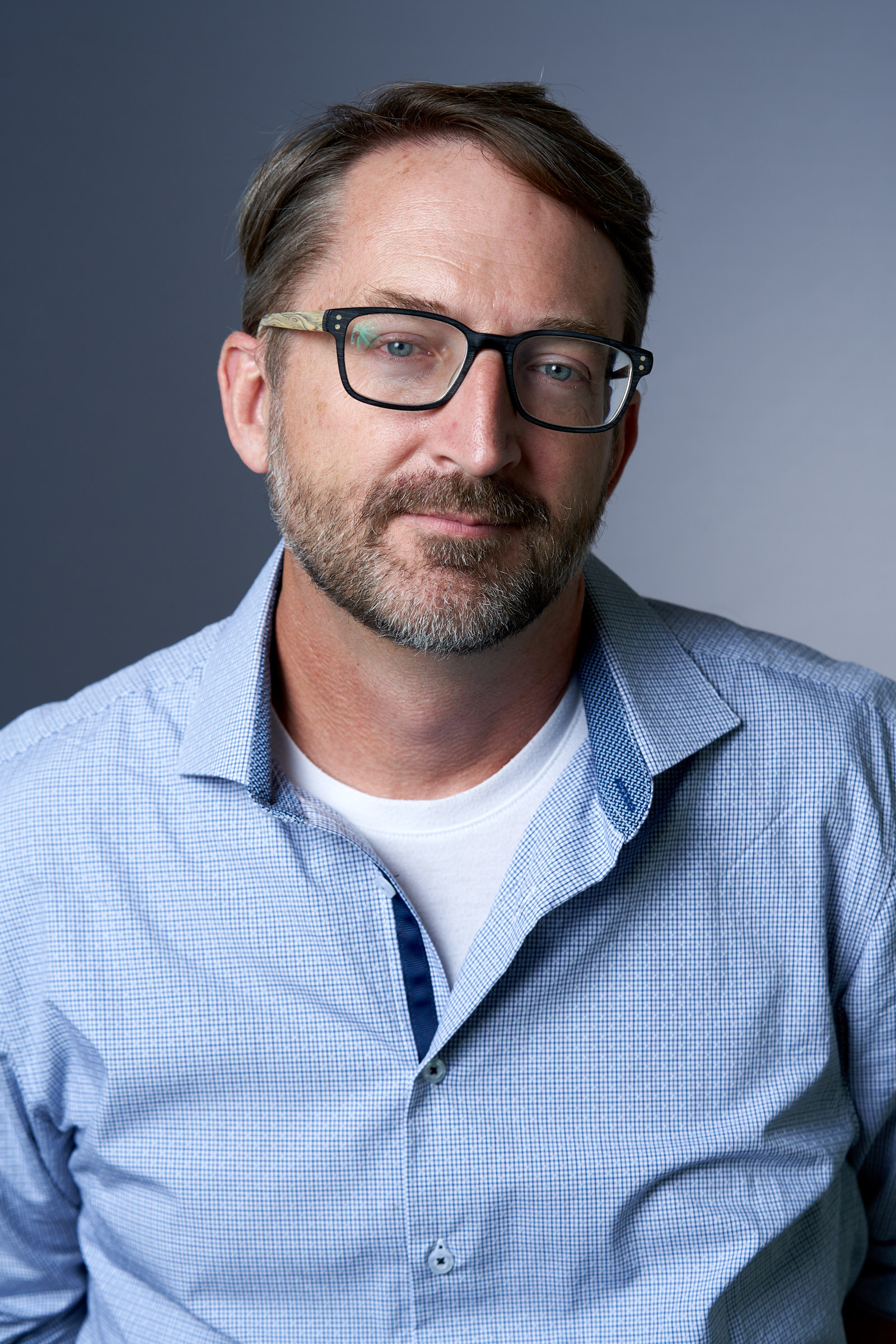
Welcome!
I’m an Associate Professor in the Department of Information Science and Department of Science and Technology Studies at Cornell University, with additional graduate field appointments in Communication and Public Affairs. I'm also the Chair of Information Science and Dean of William Keeton House, a vibrant undergraduate living-learning community that's part of Cornell's flagship West Campus housing system. I hold a Ph.D. in Communication and Science Studies from the University of California, San Diego; an M.A. in Political Economy from Carleton University in Ottawa; and a B.A. in English and Creative Writing from Concordia University in Montreal.
research
My research connects contemporary questions in information science to theoretical and methodological traditions in the critical, interpretive, and historical social sciences. Theoretically, my work is shaped by ideas and traditions coming out of American pragmatism, critical theory, and post-structuralism. Methodologically, I’m most informed by research traditions dedicated to the naturalistic understanding of order, value, and meaning as defining attributes of human activity in the world. Mostly that means ethnography, usually of the sort practiced in qualitative sociology and anthropology; but I also draw on allied traditions of work in philosophy, history, law, policy, design, science and technology studies (STS), some forms of media and cultural studies, and work in information science sub-fields like Human-Computer Interaction and Computer-Supported Cooperative Work. I'm especially interested in places where new computing forms and practices meet the material world, with implications for sustainability, development, inequality, and new (and old) cultural practices, including in art and music. I'm also interested in the messy and uncertain moments in which new technologies meet unsettled ethical and legal terrains, and the processes and controversies by which these uncertainties get reduced, codified, and normalized as practice and culture. My research has been supported by the U.S. National Science Foundation (including an NSF CAREER award), the Social Science Research Council, Ford Foundation, Sloan Foundation, World Bank, Intel, and the Canadian Social Science and Humanities Research Council.
Here are some of the more specific areas I work in, with links to recent papers:
Infrastructure, collaboration, and improvisation: ____________________
My work has long been engaged with theoretical and practical problems of infrastructure: social and material forms foundational to collective human work and action of all kinds. This includes a long series of projects around the design and effects of new computational infrastructures in the sciences. More recently, my interest has turned to problems of computation and collaboration in fields beyond the sciences - for example, robotic surgery, fine art furniture production, and new media art - and to improvisation as a form and model of collective action of many sorts. Here are links to some recent papers that deal with these themes:
Amy Cheatle, Hannah Pelikan, Malte Jung, and Steven J. Jackson, "Sensing (Co-)operations: Articulation and Compensation in the Robotic Operating Room" in Proceedings of the 2019 Computer-Supported Cooperative Work (CSCW) Conference (**best paper award**)
Samir Passi and Steven J. Jackson, "Trust in Data Science: Collaboration, Translation, and Accountability in Corporate Data Science Projects" in Proceedings of the 2018 Computer-Supported Cooperative Work (CSCW) Conference (**best paper award**)
Laewoo Kang, Steven J. Jackson and Phoebe Sengers, "Intermodulation: Improvisation and Collaborative Art Practice for HCI" in Proceedings of the 2018 Computer-Human Interaction (CHI) Conference. (** honorable mention best paper**)
Samir Passi and Steven J. Jackson, "Data Vision: Learning to See Through Algorithmic Abstraction" in Proceedings of the 2017 Computer-Supported Cooperative Work (CSCW) Conference (**best paper award**)
Steven J. Jackson and Sarah Barbrow, “Standards and/as Innovation: Protocols, Creativity, and Interactive Systems Development in Ecology” in Proceedings of the 2015 Computer-Human Interaction (CHI) Conference (**honorable mention, best paper award**)
Stephanie Steinhardt and Steven J. Jackson, “Anticipation Work: Cultivating Vision in Collective Practice” in Proceedings of the 2015 Computer Supported Cooperative Work (CSCW) Conference (**honorable mention, best paper award**)
Amy Cheatle and Steven J. Jackson, “Digital Entanglements: Craft, Computation and Collaboration in Fine Art Furniture Production,” in Proceedings of the 2015 Computer Supported Cooperative Work (CSCW) Conference (**honorable mention, best paper award**)
Steven J. Jackson and Ayse Buyuktur, “Who Killed WATERS? Mess, Method, and the Forensic Imagination in the Making and Unmaking of Large-Scale Science Networks”. Science, Technology and Human Values 39:2 (2014), pp 285-308.
Steven J. Jackson and Sarah Barbrow, "Infrastructure and Vocation: Field, Calling, and Computation in Ecology" in Proceedings to the 2013 Computer-Human Interaction (CHI) Conference (** honorable mention, best paper award **)
Breakdown, maintenance and repair: ____________________
I am endlessly fascinated by processes of breakdown, maintenance and repair as central but neglected moments in our individual and collective relationships with technology. Repair also turns out to be an excellent starting point for rethinking many central assumptions in the technology world, from design, to sustainability, to innovation. These questions have led to ethnographic projects with mobile phone repair workers around the world, amateur fixer movements in Europe and North America, and to collaborative projects with interactive and new media artists. Papers in this vein include:
Steven J. Jackson, "Speed, Time, Infrastructure: Temporalities of Breakdown, Maintenance, and Repair," in Judy Wajcman and Nigel Dodd, eds. The Sociology of Speed: Digital, Organizational, and Social Temporalities. Oxford Unversity Press: Oxford, 2017.
Lara Houston, Steven J. Jackson, Daniela Rosner, Syed Ishtiaque Ahmed, Meg Young, and Leo Kang, “Values in Repair,” in Proceedings of the 2016 Computer-Human Interaction (CHI) Conference.
Syed Ishtiaque Ahmed, Steven J. Jackson, and Mohamed Rashidujjaman Rifat, “Learning to Fix: Knowledge, Collaboration, and Mobile Phone Repair in Dhaka, Bangladesh” in Proceedings of the 2015 Information and Communication Technologies for Development (ICTD) Conference.
Steven J. Jackson and Laewoo Kang, "Breakdown, Obsolescence and Reuse: HCI and the Art of Repair," in Proceedings of the 2014 Computer-Human Interaction (CHI) Conference (**honorable mention, best paper award**)
Steven J. Jackson, “Rethinking Repair,” in Tarleton Gillespie, Pablo Boczkowski, and Kirsten Foot, eds. Media Technologies: Essays on Communication, Materiality and Society. MIT Press: Cambridge MA, 2014.
Global computing: ___________________
Much of my work is driven by the desire to build a more truly global story of computing that reflects the full range and distribution of computing work, skills and experiences (a story vastly more rich and complex than one that starts in Silicon Valley and diffuses out, sometimes, from there). This includes instances of technology development oriented to concerns and communities in the global South, as shows up under the (badly-named) field of ICTD (Information and Communication Technologies and/for Development). It also calls attention to sites and actors traditionally left out of public imaginations of computing - for example, repair workers in Bangladesh and sub-Saharan Africa; or computing-related extraction workers in Indonesia, Chile, or the Great Lakes region of Africa. Finally, it looks to non-western contexts as sites of variation and potential innovation - places where new computing practices are being worked out on the ground each day, shaped by the radically varied social, economic, and infrastructural conditions to be found around the world. I am deeply fortunate to have worked and learned with a wonderful set of students and collaborators in this space.
Ian Arawjo, Ariam Mogos, Steven J. Jackson, Tapan Parikh and Kentaro Toyama, " Computing Education for Intercultural Learning: Lessons from the Nairobi Play Project," Proceedings of the 2019 Computer-Supported Cooperative Work (CSCW) Conference (**honorable mention, best paper award**)
Ranjit Singh and Steven J. Jackson, “From Margins to Seams: Imbrication, Inclusion and Torque in the Aadhaar Identification Project,” Proceedings of the 2017 Computer-Human Interaction (CHI) Conference.
Margaret Jack and Steven J. Jackson, “Infrastructure as Creative Action: Online Buying, Selling and Delivery in Phnom Penh,” Proceedings of the 2017 Computer-Human Interaction (CHI) Conference (**honorable mention, best paper award**).
Margaret Jack and Steven J. Jackson, “Logistics as Care and Control: An Investigation Into the UNICEF Supply Division,” in Proceedings of the 2016 Computer-Human Interaction (CHI) Conference.
Syed Ishtiaque Ahmed, Nusrat Jahan, and Steven J. Jackson, “Residual Mobilities: Infrastructural Displacement and Post-Colonial Computing in Bangladesh” in Proceedings of the 2015 Computer-Human Interaction (CHI) Conference.
teaching
INFO 1200: Information Ethics, Law, and Policy
This course investigates the ethical, legal, and social foundations of contemporary information technology. Through lectures, readings, and independent projects, we will analyze and engage contemporary challenges ranging from privacy in big data, mobile computing and national security environments, to the nature of innovation, property, and collaboration in an increasingly networked world. The course draws on cases from the fields of science, health care, education, politics, and international development, but above all it draws on YOUR experiences as a user, consumer, builder, and contributor to the global world of technology. Through this course you’ll learn about the key frameworks, processes, laws and institutions that govern the contemporary world of technology, along with key theories and methods from the academic fields that shape and inform them (law, philosophy, political science, economics, communication, sociology, management, etc.). But above all you’ll learn to engage critically and strategically with the worlds of information and technology around you, deciding what kind of information consumer, user, and citizen YOU want to be.
INFO 6210: Information, Technology, and Society
This is a core course for the IS doctoral program, and exposes students to key concepts, debates, and the historical development of critical and interpretive work in information science (including tracing some of that work back to its origins in other fields – sociology, anthropology, philosophy, political science and public policy, communication, etc.). It also builds methodological skills and experience in the doing of qualitative, interpretative, and critical research in contemporary information science.
(Michigan) SI 532: Digital Government I: Information Technology and Democratic Politics
(Michigan) SI 533: Digital Government II: Information Technology and Democratic Administration
(Michigan) SI 657: Information Technology and Global Development
advising
I’ve had the great pleasure of working with and learning from some fantastic graduate students over the years, here at Cornell and in my former faculty position at the University of Michigan. Here are some of them (with links where available):
Current:
Laewoo (Leo) Kang
Samir Passi
Maggie Jack
Ranjit Singh
Amy Cheatle
Jeff Mathias
Palashi Vaghela
Jen Liu
TImur Uckun
Gone but not forgotten:
Stephanie Steinhardt (now Assistant Professor, Michigan State University)
Syed Ishtiaque Ahmed (now Assistant Professor, University of Toronto)
Lara Houston (post-doc; now post-doctoral researcher, University of London)
Alissa Centivany (now Assistant Professor, University of Western Ontario)
Dana Walker (now Critical Writing Program, University of Pennsylvania)
Radaphat (Pae) Chongthammakun (now Office of the Administrative Courts, Thailand)
Rahmad Dawood (now Professor, Syiah Kuala University, Indonesia)
Matt Burton (now lecturer, University of Pittsburgh)
Ayse Buyuktur (now research area specialist, University of Michigan)
If you’re a prospective doctoral student working in related areas, feel free to email me with a description of your work and interests. I work with and advise doctoral students in Information Science, Science and Technology Studies, and Communication (each of these fields has their own selection and admission procedures, described at the links above).
other writing
Here are some older pieces and/or ones that I'm sometimes asked to share (or just like to!). For a fuller list, see my CV.
Steven J. Jackson, “Rethinking Repair,” in Tarleton Gillespie, Pablo Boczkowski, and Kirsten Foot, eds. Media Technologies: Essays on Communication, Materiality and Society. MIT Press: Cambridge MA, 2014.
Steven J. Jackson, Tarleton Gillespie, and Sandra Payette, “The Policy Knot: Reintegrating Policy, Practice and Design in CSCW Studies of Social Computing,” in Proceedings of the 2014 Computer Supported Cooperative Work (CSCW) Conference (**honorable mention, best paper award**)
Steven J. Jackson and Sarah Barbrow, “Infrastructure and Vocation: Field, Calling, and Computation in Ecology” in Proceedings of the 2013 Computer-Human Interaction (CHI) Conference (**honorable mention, best paper award**).
Steven J. Jackson, Stephanie Steinhardt, and Ayse Buyuktur, “Why CSCW Needs Science Policy (and Vice-Versa)” in Proceedings of the 2013 Computer-Supported Cooperative Work (CSCW) Conference.
Steven J. Jackson, Alex Pompe and Gabriel Krieshok, “Repair Worlds: Maintenance, Repair, and ICT for Development in Rural Namibia” in Proceedings of the 2012 Computer-Supported Cooperative Work (CSCW) Conference.
Steven J. Jackson, David Ribes, Ayse Buyuktur, and Geoffrey C. Bowker, “Collaborative Rhythm: Temporal Dissonance and Alignment in Distributed Scientific Work,” in Proceedings of the 2011 Computer-Supported Cooperative Work (CSCW) Conference, Hangzhou, China, March 20—23, 2011.
Steven J. Jackson, Paul N. Edwards, Geoffrey C. Bowker, and Cory Knobel, “Understanding Infrastructure: History, Heuristics, and Cyberinfrastructure Policy,” in B. Kahin and S.J. Jackson, eds. “Special Issue: Designing Cyberinfrastructure for Collaboration and Innovation,” First Monday 12:6 (June 2007).
Steven J. Jackson, “Water Models and Water Politics: Deliberative Design and Virtual Accountability,” in Proceedings of the 2006 Digital Government Conference, San Diego, May 22-24, 2006.
Steven J. Jackson, “Ex-Communication: Competition and Collusion in the U.S. Prison Telephone Industry,” Critical Studies in Media Communication 22:4 (October, 2005).
stuff
Stuff I'm doing: biking, hiking, music, reading, eating; advanced pond ice-smoothing technology development.
Stuff I’m reading: Akiba Lerner (Redemptive Hope), Christina Sharpe (In The Wake), Jose Esteban Munoz (Cruising Utopia), Jussi Parikka (Geology of Media), Sean Cubitt (Finite Media); Anna Tsing (The Mushroom at the End of the World); William Kentridge (Six Drawing Lessons); Walter Isaacson (Leonardo da Vinci); Sheryl Smith (Raising Goats for Dummies).
Stuff I'm watching: The Romanoffs, Man in the High Castle.
Stuff I’m listening to: Bill Evans, Django Reinhardt, Chick Corea, and Thelonious Monk (always)!; Robert Glasper, Kamasi Washington, Richard Buckner, Sufjan Stevens, Bon Iver, Benjamin Clementine.